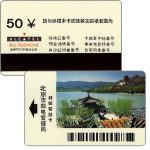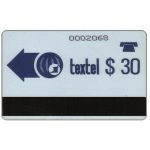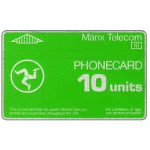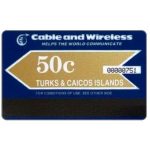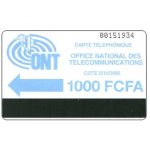
Formerly known as Plessey, the magnetic phonecards produced in Great Britain by GPT (GEC Plessey Telecommunications) are very popular and appreciated by collectors, also for being been used in many countries, in particular the Caribbean islands, already from the beginning of card phones. The GPT, which is in fact a company formed by Siemens and GEC (General Electric Company), developed its own technology that was for long time in the first places regarding the production and consumption of magnetic cards in the world, and produced the first cards in 1987. On each of the first phonecards there were seven magnetic bands, three through the central part and one at each corner; but since 1991 the two top bands were eliminated so later there were only five.
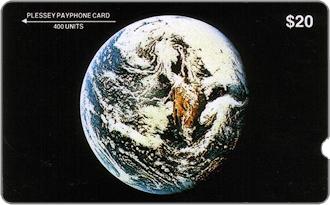
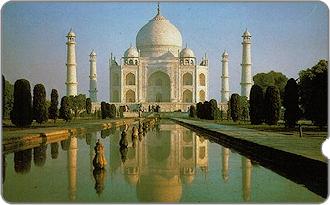
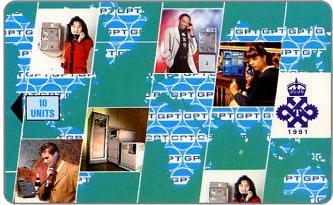
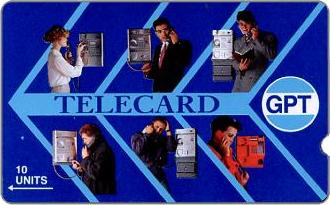
The first phonecards can be recognized by the so-called deep notch, which was in use until 1989, while all the cards produced after that date have a small notch. In some countries, such as Malaysia or Singapore, telephone devices use a system to indicate on the phonecard the number of shots taken, making a small punch on a graduated scale at the end of each call.
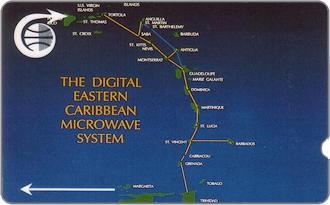
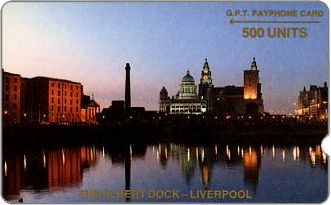
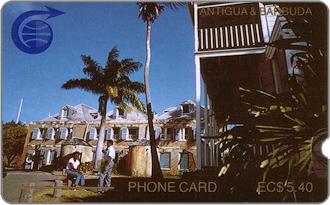

Serial numbers, printed in black, are a mix of letters and numbers and the first three letters often identify the country to which the card belongs; the first serial numbers were printed in red on the black background and to be seen it was necessary to position the card at a certain angle to the light.
However, magnetic phonecards are not the only type of card produced by GPT: already in 1991 a chip technology was developed, although the company was part of Siemens, which in turn produced modules; and many nations used phonecards with the characteristic GPT chip. In spite of this, when the GPT is mentioned at the collector level, it generally refers to magnetic cards.